


New penalty system for late submission and payment of VAT returns

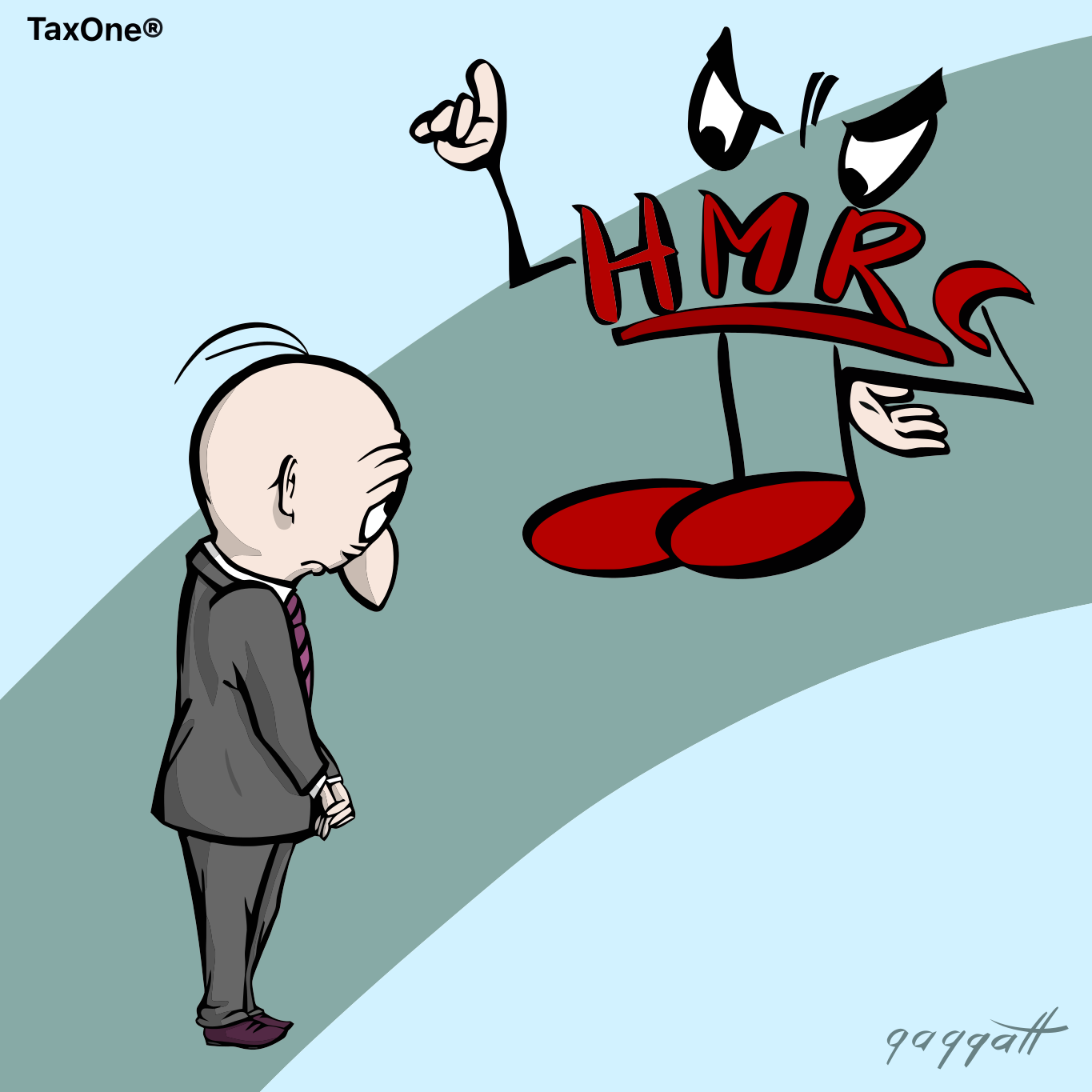
Changes to penalties for late VAT return submissions and tax payments were due to take effect on 1 April 2022, but this deadline has been postponed until January next year, as HM Revenue & Customs needs more time to adapt its systems. The new penalty system aims to treat late filers more fairly – harsher sanctions will apply to those who frequently miss deadlines. Those who are only occasionally late will be treated more leniently.
What are the penalties for late VAT payment?
Currently, the so-called default surcharge (Default Surcharge) is still in effect. This is a collective penalty for late VAT payment and for late submission of returns. First, HMRC issues a surcharge liability notice (surcharge liability notice – SLN), which remains in force for a period of 12 months. If delays recur, the SLN is extended. The penalty, depending on how many times the delay has occurred, can be up to 15% of the tax due.
Higher penalties for frequent late filers
From January 2023, this system will change, and penalties will be divided into two types: separate penalties for late submission of returns and separate penalties for failing to pay tax on time. The proposal envisages stricter treatment for taxpayers who frequently miss deadlines.
Penalty for late VAT return submission
A separate penalty for late submission of returns has been established, administered on a points-based system. The first penalty is one penalty point. If the offence recurs and the points threshold is exceeded, the tax authority will impose a fixed penalty of £200 on late filers.
The penalty thresholds are as follows:
Threshold I – 2 points annually;
Threshold II – 4 points quarterly;
Threshold III – 5 points monthly.
It is possible to reduce accumulated points to zero – all returns must be submitted within the designated period for a given accounting period. For those filing annual returns, this period is 24 months; for those filing quarterly, it is 12 months; and for those filing monthly, it is 6 months.
One penalty point will be issued for each individual failure to submit a return. For example, if a taxpayer is required to submit one annual income tax assessment (ITSA) return and should submit VAT returns quarterly, a separate point will be awarded each time a deadline is missed.
Penalty for not paying VAT on time
This penalty will be divided into two tiers based on the outstanding tax amount and the length of time elapsed since the payment deadline.
The first penalty will be 2% of the tax due if it remains unpaid within 15 days after the required payment deadline. If, after 30 days from the due date, the tax (even if only partially) is still overdue, the penalty increases to 4% of the amount owed to the tax authority. The penalty will stop being charged when the taxpayer submits a proposal to agree on a payment plan for the arrears (time to pay).
A second penalty is charged daily, after 31 days from the payment due date, at a rate of 4% per annum on the overdue amount. It stops being charged once the outstanding tax is paid.
The new penalty system for late VAT payments will not be fully implemented immediately – the tax authority will allow a year for adaptation to the new rules. From 1 January 2023 to 31 December of the same year, the first late payment penalty will not be charged if the taxpayer pays the full outstanding amount within 30 days of the payment due date.
HMRC will charge you interest
HMRC will calculate interest for the period from the payment due date until the full outstanding amount is paid. This will be calculated based on the current Bank of England base rate plus 2.5%.
You can find more information on the government website.
I've detailed interesting stories of TaxOne clients who faced penalties from HMRC in my book "Low Taxes - Legally".


