


Tax Residency for Individuals

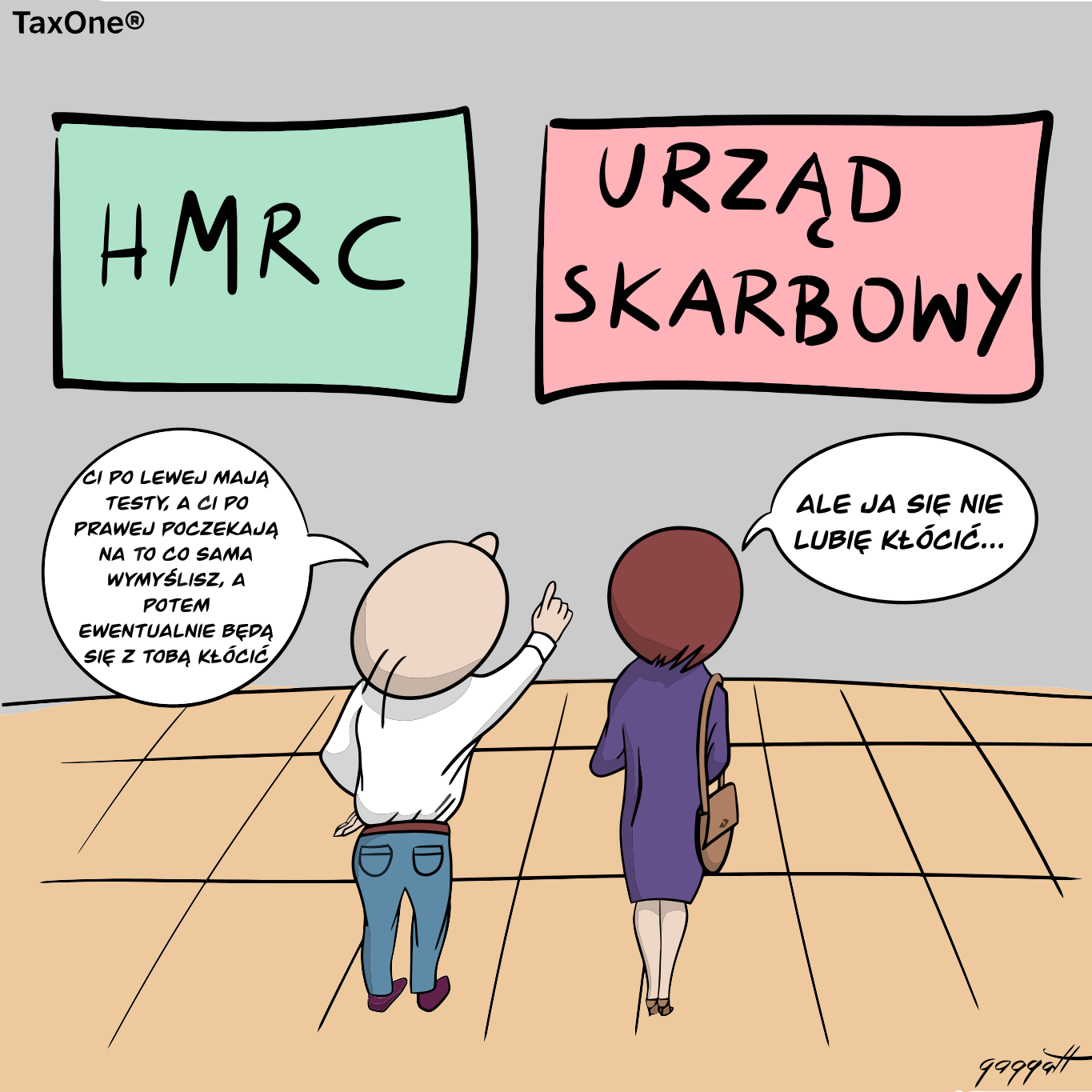
In our last article, we discussed the case of Mr. Michał, who wanted to hire employees from Poland and was therefore considering setting up an Ltd company. Since Mr. Michał works online and often travels to Poland, he wants to ensure his tax residency is correctly established. He is also interested in the tax residency of the company he would like to set up.
Tax residency tests
General rules in the UK state that a UK tax resident is obliged to pay taxes on income (Income Tax) and capital gains (Capital Gains Tax) from all countries. A person who is not a tax resident of the United Kingdom pays taxes in the UK only on income earned in the UK in a given tax year.
Tax residency is determined using residency tests (Statutory Residency Tests – SRT). They are very detailed and designed to adapt to every potential life situation. As is often the case in life, the outcomes vary. One can have a single residency, or none at all – as such situations also occur, usually when someone travels a lot and has no permanent place of residence anywhere. One can also be a tax resident in the UK and in another country, according to that country's tax regulations.
Determining residency according to the Polish tax office
As we have already mentioned, the structure of the British residency tests is designed to allow them to be adapted to various life situations. In contrast, determining residency in the Polish context is essentially limited to stating that: "An individual is considered to have a place of residence in Poland if they:
1) have a center of personal or economic interests (center of vital interests) in Poland, or
2) stay in Poland for more than 183 days in a tax year.
It should be emphasized that these are two independent conditions; they do not have to be met jointly. The mere fact of a long-term stay abroad does not determine a change of place of residence (place of residency)."
The taxpayer must determine their own residency. If, in the opinion of the Polish tax office employees, the residency has been incorrectly determined, then all accompanying circumstances are examined: where the taxpayer spends more days in a year, where their permanent place of residence is, where their place of work is, and where their immediate family is located.
MLI/DTA, or the Convention on the avoidance of double taxation and the prevention of tax evasion
As mentioned above, it sometimes happens that an individual may have more than one tax residency. In such cases, the taxpayer's affairs are governed by international agreements. For Poland and the United Kingdom, this is the Convention for the Avoidance of Double Taxation. MLI, or Multilateral Instrument is a set of legal provisions from which two countries can select specific clauses and implement them as binding regulations in their relations (which also implies making changes to the domestic legal regulations of both countries). Poland and the United Kingdom signed such an agreement in 2006. The MLI was created to block aggressive tax optimization, i.e., to prevent tax avoidance, but it also aims to prevent a situation where a taxpayer in two countries would pay double tax on the same income. Under this agreement, if you are a tax resident of the United Kingdom, the amount of tax paid in Poland is deducted from your tax liability in the UK. This means tax is paid only once.
An analysis of Mr. Michał's life circumstances indicates that he is a tax resident of the United Kingdom – although he frequently travels to Poland, he still spends the majority of the tax year in the United Kingdom. His home, work, and family are also located there. And how is the tax residency of a Ltd company determined? We'll cover that in our next publication.


